Our Story, Our Journey

About Us

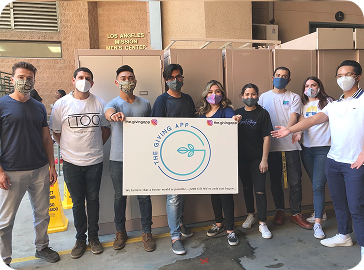
We started The Giving Project in 2019 with a simple goal: to modernize the charitable giving experience through our first mobile platform, The Giving App.

But as we grew, so did our questions.

  • Were we truly making an impact?

  • Were the organizations we supported the best of the best?

  • Were our donations actually making a difference?

These questions led us on a multi-year journey — diving deep into the world's most respected philanthropic research and exploring the most effective ways to give.

What we discovered reshaped our mission.
Now, we're proud to introduce the next chapter: The Giving Project.

It’s giving that just makes sense! Dollar-friendly, high-impact, data-driven, community-powered generosity.

At our core, we’re just a bunch of ordinary people and businesses alike, making a measurable difference in the world — one effectively given dollar at a time.

Welcome to The Giving Project.

Join the Movement

Our Mission

To make a generous life the normal life by empowering people and businesses to give confidently, live selflessly, and measurably change the world.

Our Vision

To build a community of One Million Monthly Givers committed to living more selfless and abundant lives.

Our Methodology - The Giving Project

Our Charity Selection Methodology

At The Giving Project, our goal is to help people give confidently to charities that do real, measurable good. We focus on organizations that use evidence-based approaches to address some of the world's most pressing problems. We do not claim that our process is perfect or exhaustive. Instead, we aim to be transparent about how we choose charities, what we prioritize, and where uncertainty remains.

How We Evaluate Charities

1. Our focus areas

We concentrate on causes where donations can have outsized impact per dollar, especially for people facing extreme disadvantage.

Our current focus areas include global health and public health, extreme poverty alleviation, and environmental restoration and sustainability.

These areas were chosen because they affect large numbers of people or ecosystems, include interventions with strong empirical support, and are often underfunded relative to their importance.

2. Evidence of effectiveness comes first

We prioritize charities whose core programs are supported by credible evidence, such as randomized controlled trials, large-scale program evaluations, peer-reviewed research, and longstanding real-world track records.

Examples of strong evidence include:

  • Insecticide-treated bed nets to prevent malaria
  • Direct cash transfers to people in extreme poverty
  • Vitamin A supplementation to reduce child mortality
  • Incentives that increase vaccination and prenatal care uptake

We favor interventions that are proven to work, not just well-intentioned.

3. Cost-effectiveness and scale

We consider how much impact a charity can deliver per dollar donated.

This does not mean we chase precise numbers at all costs. Instead, we ask:

  • Whether a charity can achieve meaningful outcomes at relatively low cost
  • Whether additional funding can scale their impact further
  • Whether there is room for more funding or if programs are already saturated

Charities that can turn modest donations into large, measurable benefits are prioritized.

4. Organizational quality and transparency

Beyond impact, we evaluate whether an organization is well run and trustworthy.

We look for:

  • A clear mission and strategy
  • Strong leadership and governance
  • Publicly available financial information
  • A willingness to share data and evaluation results
  • A track record of delivering programs responsibly

As a baseline, we select U.S.-registered 501(c)(3) nonprofit organizations that meet high standards of transparency and accountability, including a Platinum rating on Candid (GuideStar) and/or a four-star rating on Charity Navigator. We avoid organizations that make vague or unverifiable impact claims, lack basic financial transparency, or rely primarily on marketing rather than outcomes.

5. Use of external research and recommendations

Where possible, we rely on independent third-party evaluators and established research organizations, including global health researchers, charity evaluation groups, and academic and policy literature.

Several of the charities we support are also recommended by well-known effective giving organizations. While we do not outsource our judgment entirely, external validation plays an important role in our decision-making.

6. Environmental impact considerations

For environmental charities, we apply additional scrutiny. This includes:

  • Clarity about what activities actually occur on the ground
  • Transparency about outcomes such as trees planted and survival rates where available
  • Avoidance of exaggerated or misleading claims

We recognize that environmental impact can be harder to measure precisely, and we account for this uncertainty when making recommendations.

7. Ongoing review and updates

Charities are not selected permanently.

We aim to periodically review supported charities, reassess programs as new evidence becomes available, and update or remove charities if standards are no longer met. Our recommendations reflect our best judgment based on current information, not guarantees of future performance.

8. Our limitations

We believe it is important to be clear about what we do not do:

  • We do not evaluate every charity in existence
  • We do not claim our list represents the only good charities
  • We cannot eliminate all uncertainty from impact estimates

Our role is to narrow the field to a small set of high-confidence options, not to replace individual judgment.

9. Why we share this publicly

Trust matters in philanthropy.

By sharing our methodology, we invite questions, critiques, and suggestions for improvement. We believe donors deserve to understand how decisions are made, not just what decisions are made.

In plain terms

We choose charities that are evidence-based, cost-effective, transparent, and capable of turning donations into real-world outcomes, while being honest about uncertainty and limits.

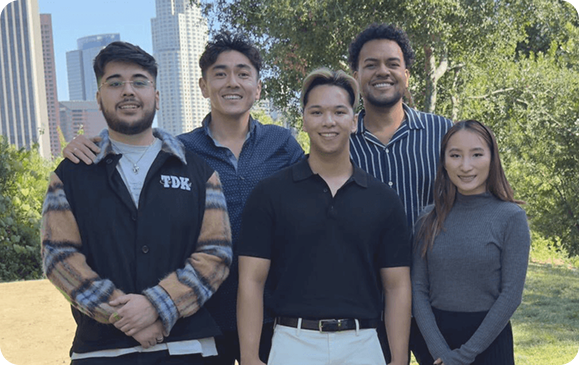
The Giving Project Team

James Mizuki

Founder & CEO (?)

Rob Baker

Head of Marketing

Justin Punzalan

Product & Development Lead

Ramon Torres

Brand Manager

Zhi Qiu

Product Designer

Buster

VP of Pawsitive Vibes

Stay in the Loop on Future Updates

Be the first to know about exciting developments and news from our platform. Opt-out anytime with ease.

Thank you! You will now receive updates via email.
Oops! Something went wrong while submitting the form.